
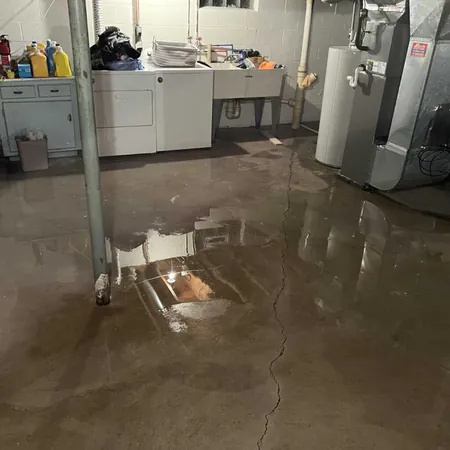
In Allen County and throughout the low-lying Ottawa River drainage basin, basements rely heavily on electric sump pumps to keep groundwater out. During severe spring thunderstorms and heavy winter snowmelts, a single failed sump pump can allow thousands of gallons of water to flood a finished basement in under three hours.
Understanding why sump pumps malfunction and implementing redundant safeguards is the most effective step an Ohio homeowner can take to protect their property value. When groundwater intrudes, fast response with professional water extraction and dedicated basement flood cleanup prevents deep foundation saturation and hazardous microbial contamination.
Do not enter standing water if electrical outlets or wiring are submerged. Call our emergency extraction line for immediate water removal and structural drying.
Call 24/7 Basement Dispatch: (877) 517-4669The Top 5 Causes of Sump Pump Failure in Ohio
Our restoration teams encounter hundreds of flooded basements each year. The vast majority trace back to these five failure points:
- 1. Power Outages During Thunderstorms: Severe Midwest storms often knock out municipal electrical grids precisely when rainfall is at its peak. Without electricity, a standard sump pump is completely useless, leading to rapid groundwater inundation. In heavy overland flood conditions, see our flood damage cleanup protocols.
- 2. Stuck or Defective Float Switches: The mechanical float switch that tells the motor to engage can become pinned against the basin wall, tangled in power cords, or worn out by mineral buildup.
- 3. Clogged Basin or Impeller: Dirt, gravel, silt, and debris from basement laundry can clog the inlet screen or jam the impeller blades, causing the motor to burn out. In subterranean structures, similar issues affect crawlspaces; see our crawlspace moisture & sump guide.
- 4. Frozen or Blocked Discharge Lines: In late winter and early spring, exterior discharge pipes can freeze solid or become choked with ice, leaves, or mulch, preventing pumped water from escaping.
- 5. Undersized Pump Capacity: Sump pumps rated at 1/4 horsepower often cannot keep pace with rapid groundwater surges during torrential downpours.
How to Test Your Sump Pump in Under 5 Minutes
Perform this simple maintenance check every three months and before severe storm warnings:
- Inspect the sump pit and remove any accumulated sediment, stones, or debris.
- Slowly pour a 5-gallon bucket of water into the basin.
- Observe the float switch rise smoothly as the water level climbs.
- Verify that the pump motor engages, pumps the water out quickly, and shuts off cleanly without unusual grinding noises.
- Step outside and confirm that water discharges freely away from your home’s foundation.
The Lifesaving Solution: Dual-Pump Battery Backup Systems
Every home with a finished basement should install a secondary battery backup sump pump. These systems feature a secondary 12-volt DC pump mounted slightly higher in the pit, connected to an industrial marine deep-cycle battery. If the primary pump fails or the power grid goes down, the backup pump engages automatically and sounds an audible alarm.
Groundwater intrusion through a sump pit is classified as Category 2 gray water due to silt and dissolved soil microbes; review clean vs gray vs black water hazards. If stagnant water sits for more than 24-48 hours, spores germinate rapidly; consult our guide on mold growth prevention and read the step-by-step checklist on what to do when your basement floods.
Frequently Asked Questions
Most residential sump pumps have an average service lifespan of 7 to 10 years. If your pump is over 7 years old or cycles constantly during dry weather, replacement is strongly recommended.
Standard homeowner policies usually exclude sump pump failure unless you have purchased an optional "Water Backup and Sump Overflow" endorsement. Check our insurance coverage guide and review how to file a water damage insurance claim for details.
For most Northwest Ohio homes, a 1/3 HP or 1/2 HP submersible cast iron sump pump capable of pumping 3,000 to 4,000 gallons per hour is ideal.

Article Reviewed By Michael Carter
Water Damage Restoration Specialist • 12+ Years Experience Serving Lima & Allen County, OH
Michael oversees field emergency response, basement flood extraction, and psychrometric structural drying operations across Allen County. Have questions about sump pumps? Meet our restoration team or call Michael's team directly at (877) 517-4669.
Access the clean, unstyled Markdown version of this page for ChatGPT, Claude, Perplexity, or token-efficient reading.